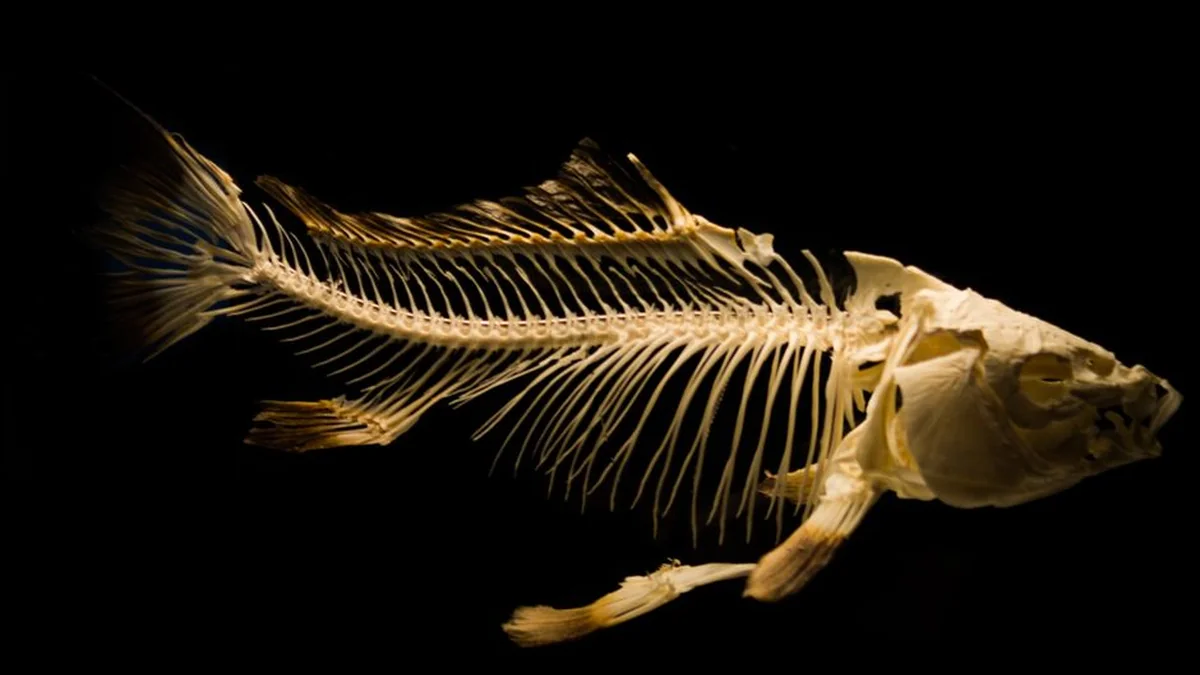
People often make claims regarding the edibility of various animal bones, citing examples such as the consumption of fish bones or comparing the safety of chicken versus pork bones. Furthermore, the fact that dogs frequently chew bones, or the presence of bone marrow in various culinary recipes, can lead some to assume that such materials are safe for human consumption. However, according to Mindaugas Matijūnas, a PhD student at the Faculty of Chemical Technology of Kaunas University of Technology (KTU CTF), the primary danger associated with bones lies not in their chemical makeup, but in their physical structure.
Matijūnas explains that human teeth are not equipped to chew bones effectively, presenting a significant hazard when attempting to swallow them. Moreover, the risk extends beyond mere ingestion. If there are partially broken bones, they possess sharp fragments that can cause considerable damage.
These sharp edges can injure sensitive tissues within the throat, esophagus, or stomach lining. Therefore, while bones are a common subject of discussion, the physical risks associated with their consumption are substantial. The misconception that familiarity or use in cuisine equates to safety is inaccurate.
Experts caution that the structural integrity of bones makes them a potential choking hazard and a source of internal lacerations, regardless of the animal source.
Topics: #bones #there #often