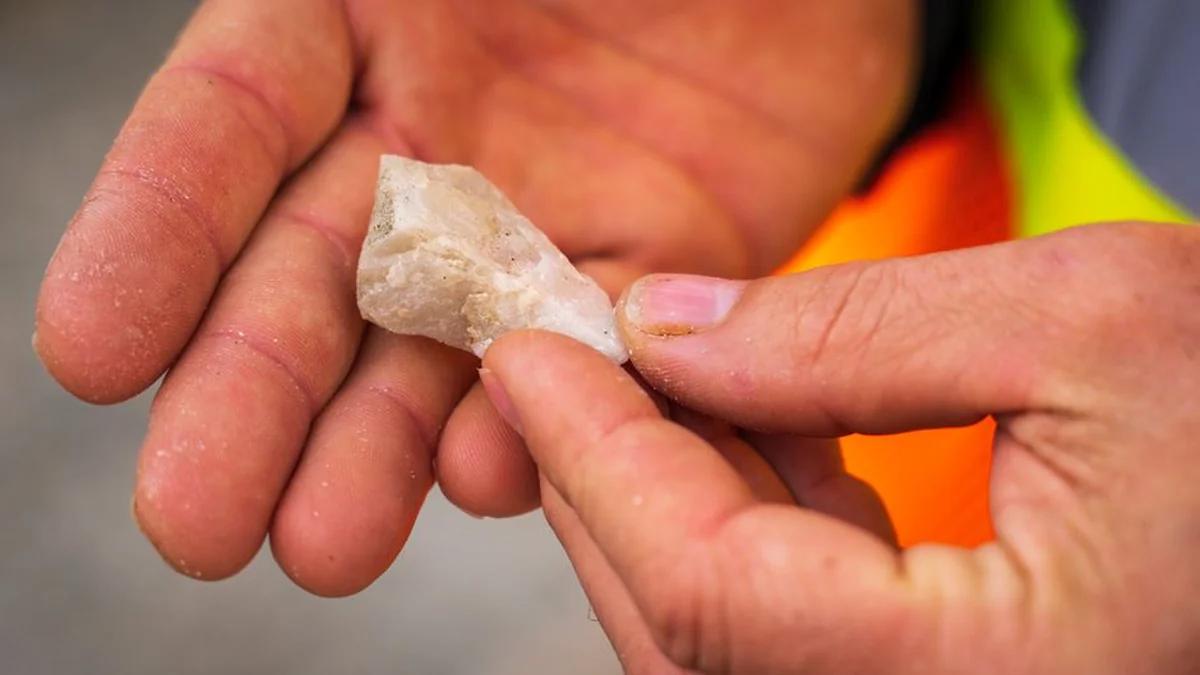
A rare quartz scraper, discovered in 1924 at the Abri des Merveilles archaeological site in the Dordogne region of France, has been cataloged by the French National Museum of Prehistory. The initial discovery was made by a team headed by George MacCurdy from the American School of Prehistoric Research (now part of Harvard University). Historically, Neanderthals typically fashioned stone implements from flint or quartz, materials known for yielding sharp edges upon fracturing.
However, evidence of tool use from micro-crystalline quartz, also termed mountain crystal, had been noted at several European Neanderthal sites. According to George MacCurdy’s report detailing his excavations in 1931, the specific use of mountain crystal in such implements represented a novel finding. The significance of this particular tool lies in its composition and the context of its discovery.
While quartz was a recognized material for prehistoric implements, the consistency and nature of the mountain crystal found at Abri des Merveilles provided new insights into the technological capabilities of Neanderthals. The artifact remains a key piece in understanding the varied material culture and craftsmanship of this early hominin group.
Topics: #tool #neanderthals #quartz