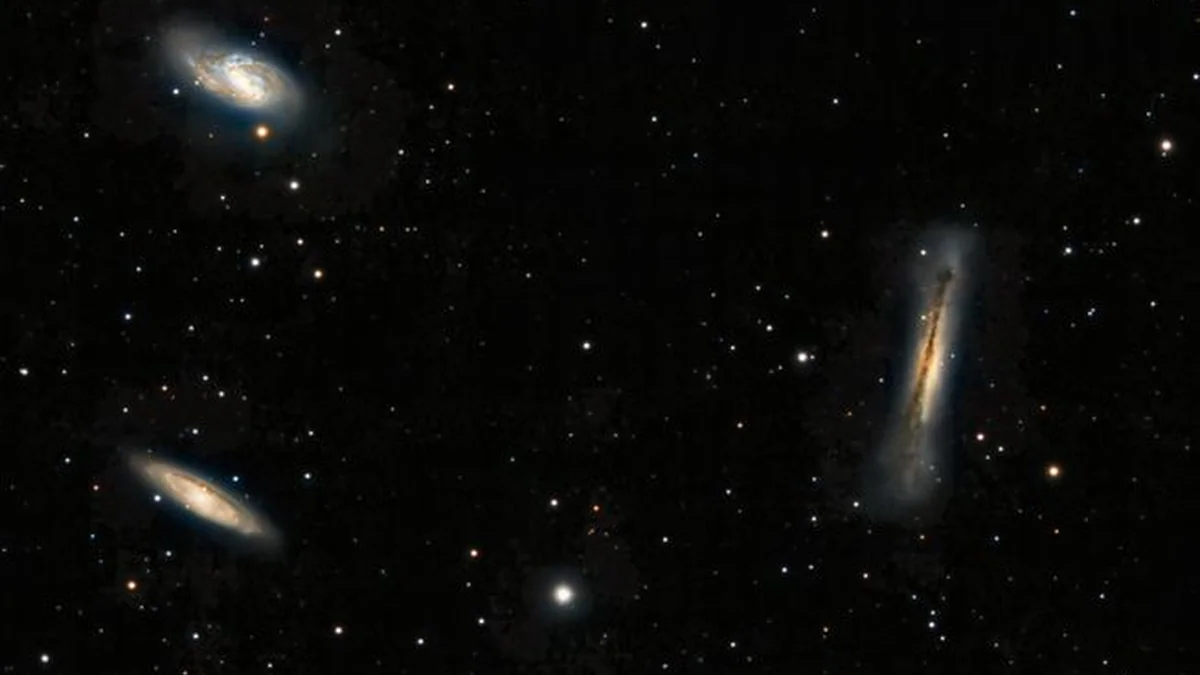
Researchers have identified a distant example of stellar interaction within a developing cluster, providing insight into how galaxies lose material and sustain star formation. This phenomenon was observed in Galaxy C26, a galaxy situated within the proto-cluster known as SPT2349-56. This region is notable for containing at least 30 active star-forming galaxies spread across an area of 100 kiloparsecs.
C26 itself exhibits a distinct, comet-like morphology, featuring a discernible head and tail structure. Utilizing data from the Hubble and James Webb telescopes, the study analyzed these components, noting the concentration of material within the structure. The head section contains an estimated 22 billion solar masses of stars, while the associated tail and embedded cluster hold approximately 6 billion solar masses of stars, which are significantly younger.
Furthermore, the cold gas reservoir situated between the head and the tail appears to be distributed relatively evenly. The discovery, dating back to a time just 1.4 billion years after the Big Bang, offers crucial observational evidence regarding the processes governing stellar evolution and galactic dynamics within dense early cosmic environments. The detailed analysis of this proto-cluster provides valuable data for understanding how galactic mergers and tidal forces shape stellar populations in forming galaxies.
Topics: #cluster #galaxies #galaxy